
Looking for Pure Cow Milk in Dharuhera? 10 Questions to Ask Before Buying

Milk reaches your family’s table every day. However, most labels tell you very little about the cow, her food, her freedom or the farm behind the bottle. Therefore, families looking for pure cow milk in Dharuhera should ask more than one question: “Is this A2 milk?” They should also ask how the cows live, what they eat, how the milk is handled and whether the source can be traced.
Gaumaa Farms is located in Nikhri, Dharuhera, in the Rewari district of Haryana. We raise indigenous Gir and Sahiwal cows and offer raw A2 milk and traditional dairy products. Our approach begins with a simple family promise: we offer customers only what we would confidently serve in our own home.
1. Can the dairy identify the cows producing the milk?
A trustworthy dairy should clearly explain where its milk comes from. “Cow milk” alone is not enough because breeds, farm systems and sourcing models differ. Some sellers collect milk from several suppliers. In that situation, customers may find it difficult to trace the milk to a specific herd.
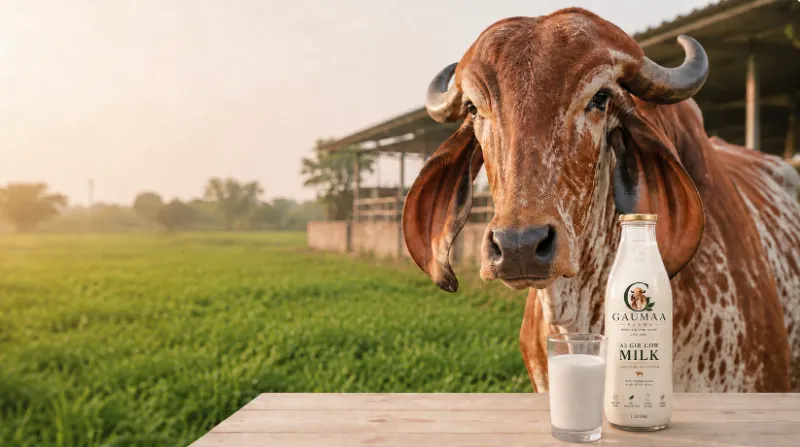
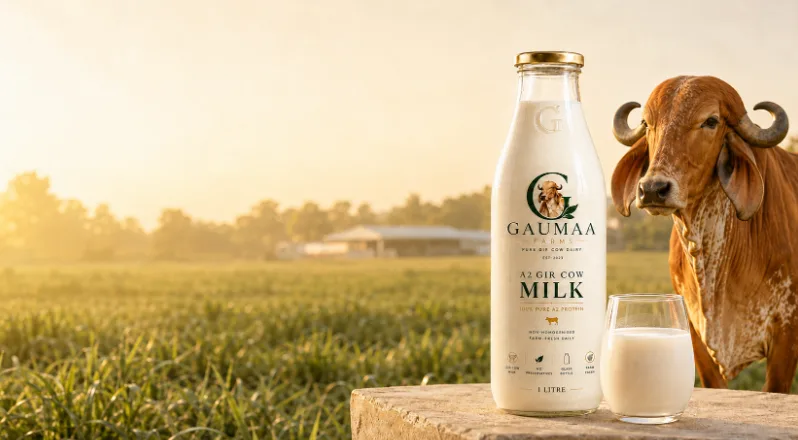
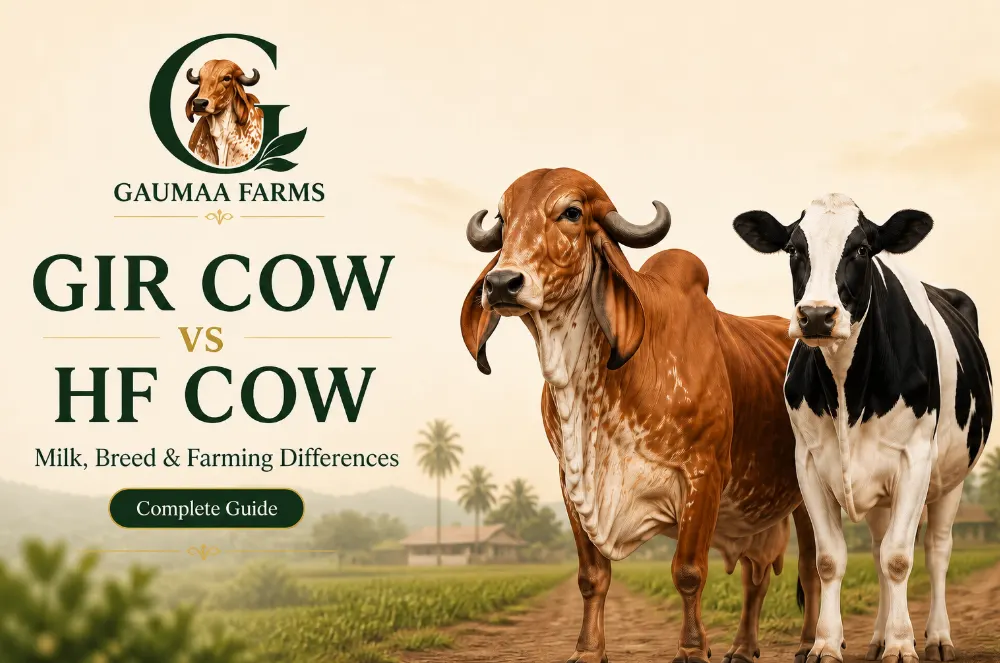
At Gaumaa Farms, our dairy story centres on indigenous Gir and Sahiwal cows. These breeds connect our products to a visible farm and a known system of care. Moreover, customers can contact our farm team to ask questions about the herd, products and farm visits.
2. Are the cows allowed to move freely?
Cow care should not appear only as a photograph on a packet. Instead, buyers should ask how cows spend an ordinary day. Can they walk around the farm? Do they have space to rest? Are they kept comfortable during changing weather?
At Gaumaa, our cows can move freely around the farm rather than spending their lives routinely tied with ropes. This matters to us because we see each cow as a living member of the farm, not simply as a source of milk. Consequently, our articles and product pages will increasingly show real farm practices instead of relying on broad words such as “premium” or “natural.”
3. What do the cows eat?
A good answer should include more than “green grass.” A balanced farm routine may include green fodder, dry fodder and other suitable nutrition. In addition, availability changes with the season. Therefore, an honest farm should describe its feeding practices without pretending that every ingredient is available every day.
Gaumaa cows receive green fodder, dry fodder and seasonally available plants. Depending on season and grazing conditions, their diet may include neem leaves, moringa, beetroot, turmeric root, sugarcane, turnip, lemongrass, radish, ashwagandha, jivanti, giloy and other local or forest plants. We describe these ingredients as part of animal husbandry and dietary variety. We do not claim that the medicinal properties of an herb automatically transfer into milk.
4. How is the fodder grown?
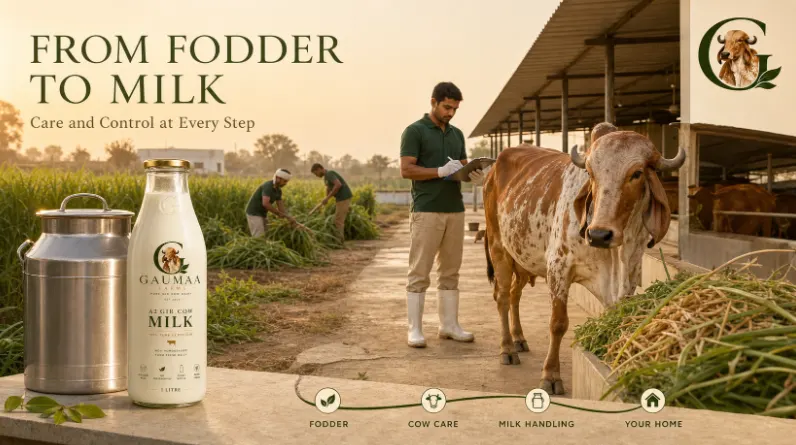
Purity does not begin when milk enters a bottle. It begins much earlier, with the soil, water, fodder and daily decisions made at the farm. For this reason, customers should ask whether the dairy knows how its fodder is cultivated.
Gaumaa uses manure from its own cows while growing fodder. This creates a practical farm cycle: cows provide manure, manure supports the soil, and the soil produces fodder for the herd. As a result, the farm remains closely connected to the source of the cows’ food. We will not use certification language unless a valid certification specifically supports it. Nevertheless, we can transparently explain the cultivation practices we follow.
5. Does the dairy make unsupported health claims?
Strong marketing can sound attractive. However, responsible food businesses should separate established facts from promises that require evidence. A2 refers to a beta-casein protein variant. It does not mean lactose-free. Furthermore, A2 milk is not suitable for someone with a cow-milk protein allergy.
Gaumaa will never claim that its milk cures, prevents or treats disease. Similarly, we will not suggest that herbs eaten by cows turn milk into medicine. Instead, our strongest case is traceability: customers can understand our breeds, location, cow-care approach, fodder practices and product-making methods.
6. Is the milk raw or pasteurised?
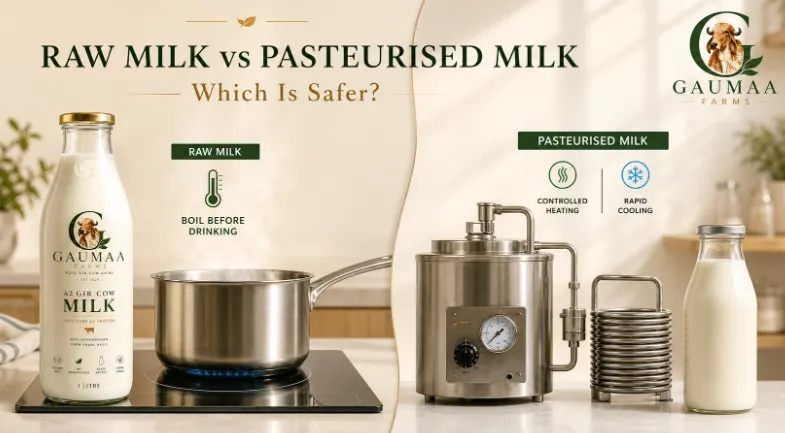
Customers need a direct answer because storage and handling depend on it. Raw milk has not undergone pasteurisation. Therefore, it requires careful handling, prompt refrigeration and appropriate boiling before household consumption.
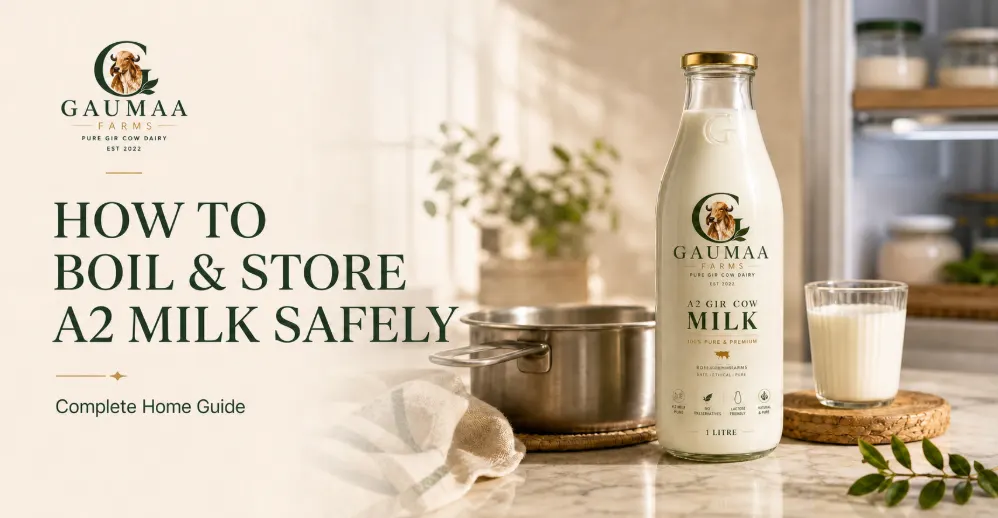
Gaumaa supplies raw A2 cow milk. Customers should follow the handling guidance provided with the product and keep the milk cold. In addition, utensils used for boiling and storage should be clean. After boiling, cool the milk safely and refrigerate it in a covered container. Do not leave it at room temperature for extended periods, especially during Haryana’s hot months.
7. Can the customer trace other dairy products to the same farm standard?
Milk is only one part of the family kitchen. Many households also buy paneer, dahi, lassi, makhan and ghee. Therefore, buyers should ask whether those products follow a consistent standard or come from unrelated suppliers.
Gaumaa offers raw A2 milk, paneer, Bilona dahi, lassi, makhan and traditional Bilona ghee. Our goal is to follow one care-led philosophy across the range. For example, the ghee story begins with milk, continues through dahi and makhan, and ends with slow preparation into ghee. This process gives customers a clearer product story than a vague “traditional” claim.
8. Is the farm close enough to be accountable?
Local sourcing does not automatically guarantee quality. However, proximity can improve accountability because customers know where the business operates and whom to contact. A nearby farm can also explain delivery coverage accurately instead of promising service everywhere.
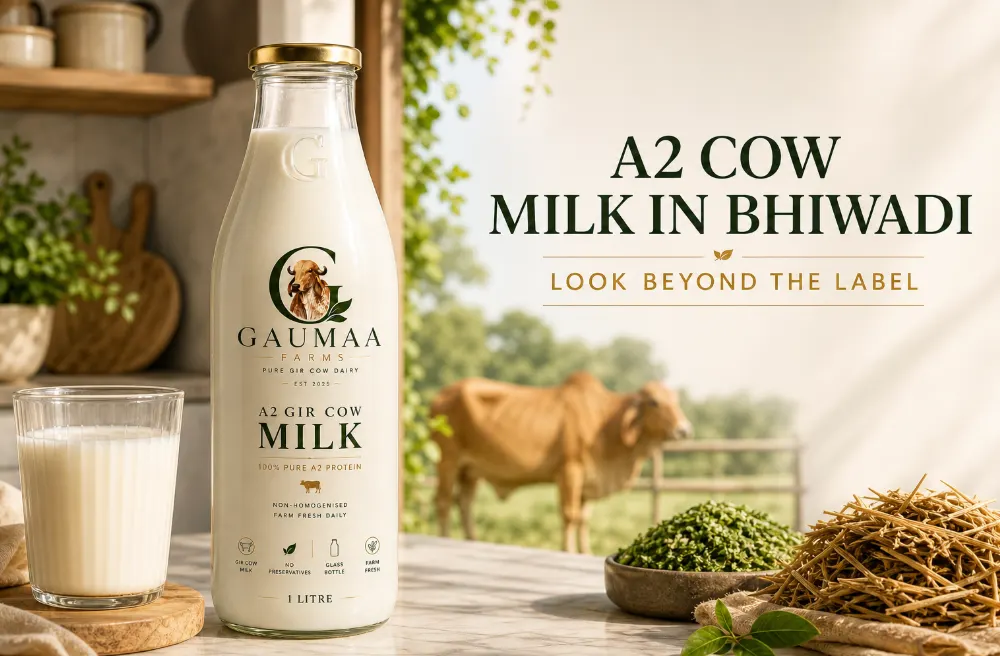
Gaumaa Farms operates from Nikhri, Dharuhera. Milk, dahi and lassi delivery currently covers Dharuhera, Bhiwadi and Rewari, subject to product and route availability. Customers should contact the farm team to confirm service for their address. We prefer an honest delivery answer over a promise we cannot keep.
9. Can customers ask questions or enquire about a farm visit?
Transparency should continue after a customer places an order. Buyers may want to understand cow care, check product availability or arrange a visit. Therefore, a dairy should make genuine contact easy.
Customers can contact Gaumaa Farms about delivery, subscriptions, product availability and farm visits. Visits should be arranged in advance so the team can confirm a suitable time. A visit is not merely a sales activity. Instead, it helps families connect the product on their table with the animals, people and land behind it.
10. Would the farm serve the same product to its own family?
This final question is emotional, but it is also practical. A food business should not maintain one standard for its owners and another for paying customers.
Our promise at Gaumaa Farms is straightforward: if we would not confidently serve a product to our own children, parents and family, we should not offer it to yours. That promise does not replace hygiene, evidence or responsible handling. Rather, it guides the daily decisions behind cow care, fodder, milk and traditional dairy preparation.
Why choose Gaumaa Farms for A2 milk in Dharuhera?
Gaumaa does not ask customers to choose us merely because we use the words “A2” or “pure.” Instead, we invite families to look at the complete chain: indigenous Gir and Sahiwal cows, freedom of movement, green and dry fodder, seasonally varied plants, manure-supported fodder cultivation, local traceability and one family-quality promise.
These practices do not make milk a medicine. However, they give customers something valuable: a dairy source they can question, understand and hold accountable.
Conclusion
When searching for pure cow milk in Dharuhera, compare more than price, thickness or cream. Ask about the cows, fodder, movement, sourcing, handling and farm location. Then choose the dairy whose answers are specific and transparent.
If you live in Dharuhera, contact Gaumaa Farms to check raw A2 milk availability, discuss delivery for your area or enquire about a scheduled farm visit. We will offer your family only what we would confidently place on our own table.
Frequently asked questions
Where is Gaumaa Farms located?
Gaumaa Farms is located in Nikhri, Dharuhera, Rewari district, Haryana.
Which cow breeds does Gaumaa Farms raise?
The farm raises indigenous Gir and Sahiwal cows.
Is A2 milk lactose-free?
No. A2 describes a beta-casein variant and does not mean the milk is free from lactose. For evidence-aware guidance, see the FSSAI milk and milk-products FAQ.
Can a person with cow-milk protein allergy drink A2 milk?
No. A2 milk remains cow’s milk and is unsuitable for somebody with a cow-milk protein allergy.
Where does Gaumaa deliver fresh dairy products?
Milk, dahi and lassi delivery currently covers Dharuhera, Bhiwadi and Rewari. Customers should confirm product and route availability directly with the farm.