
Where to Buy Pure Bilona Ghee in Gurgaon: 10 Questions to Ask


Searching for pure Bilona ghee in Gurgaon can feel confusing. Many jars carry the words “A2,” “traditional,” “Vedic” or “farm fresh,” yet those words do not always explain the actual process. Therefore, a careful buyer should ask how the ghee begins, which cows supply the milk and whether the producer can describe every stage from milk to dahi, makhan and ghee.
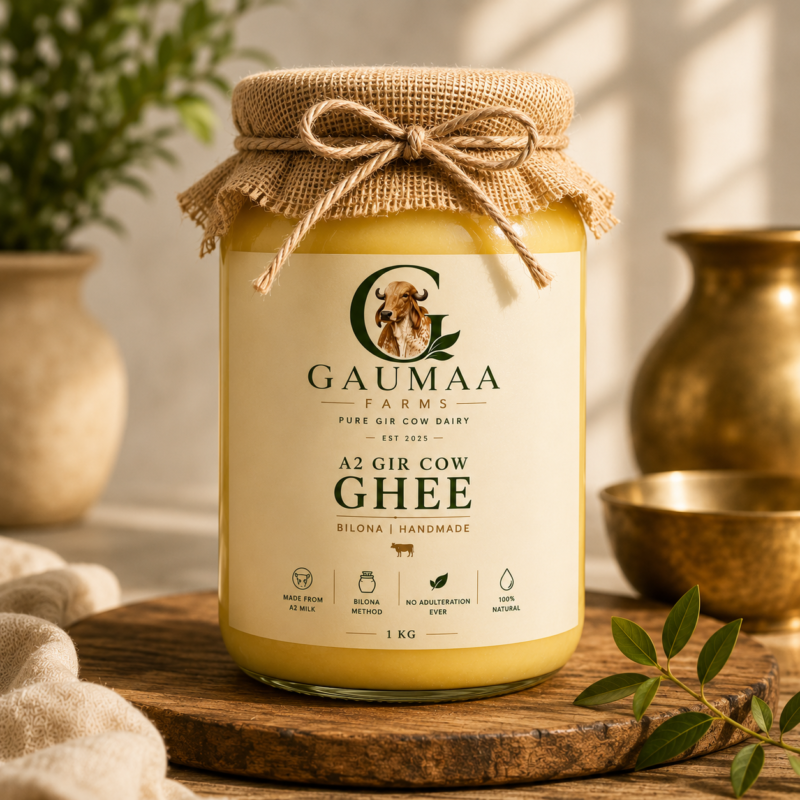
Gaumaa Farms prepares traditional Bilona ghee from the dairy system connected to our indigenous Gir and Sahiwal cows in Nikhri, Dharuhera. Ghee may be available in Gurgaon, subject to current stock and delivery confirmation. Our promise is simple: we offer customers only what we would confidently serve our own family.
1. Does the process begin with milk and dahi?
Bilona is not merely another word for cow ghee. Traditionally, milk is used to prepare dahi. The dahi is then churned to separate makhan, and the makhan is heated carefully to make ghee. By contrast, many large-scale processes separate cream directly from milk and make ghee from that cream.
Both products may legally be sold as ghee when they meet applicable standards. However, customers paying specifically for Bilona ghee should receive a clear explanation of the curd-churning process. At Gaumaa, our product story follows the milk-to-dahi-to-makhan-to-ghee route.
2. Can the seller identify the cow breeds?
“A2” relates to a beta-casein variant in milk. When a seller uses A2 as a major claim, customers should ask where the milk comes from and which breeds form the herd.
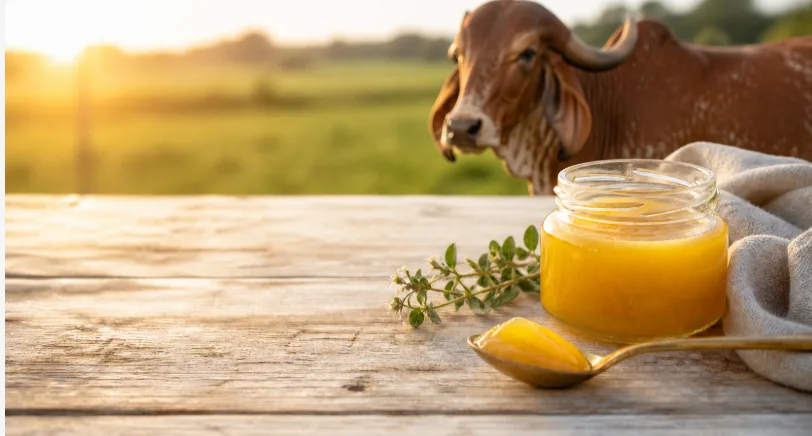
Gaumaa raises indigenous Gir and Sahiwal cows. More importantly, these cows live on a traceable farm rather than disappearing behind an anonymous supply chain. Breed information alone does not prove every quality claim. Nevertheless, it gives the buyer a clearer starting point.
3. How are the cows cared for?
Ghee sits in a jar, but its story begins with a living animal. Therefore, buyers should consider cow movement, rest, food and daily attention—not only colour and aroma.
Gaumaa cows can move freely around the farm rather than remaining routinely tied with ropes. They receive green fodder, dry fodder and appropriate nutrition. Depending on the season and grazing conditions, they may also eat neem leaves, moringa, beetroot, turmeric root, sugarcane, turnip, lemongrass, radish, ashwagandha, jivanti, giloy and other local plants.
We describe these foods as part of husbandry and dietary variety. We do not claim that an herb transfers a therapeutic effect into ghee.
4. Does the farm understand its fodder source?
Customers often ask whether ghee is pure, but purity begins long before the final jar. Soil and fodder influence the farm system in which cows live.
Gaumaa uses manure from its own cows while growing fodder. This practice connects the herd with the land that supports its food. However, we avoid using formal organic-certification language unless a valid certification supports that exact claim.
5. Why can genuine Bilona ghee cost more?
The Bilona route includes several stages. First comes milk. Next, the producer sets dahi and churns it to obtain makhan. Finally, the makhan is heated carefully until water separates and the characteristic ghee develops.
This longer route requires raw material, time, attention and handling. Therefore, buyers should not compare jars only by price per litre. Instead, compare the source, process, transparency, packaging and evidence behind the claim.
Gaumaa does not publish invented yield figures to justify a premium. Actual yields can vary. We prefer to explain the real production stages rather than use a dramatic number without batch-specific records.
6. Do colour and graininess prove purity?
No single home observation can prove that ghee is pure. Colour may vary because of breed, feed, season and preparation. Similarly, graininess can change with cooling conditions and storage.
A pleasant aroma or granular texture may be part of the sensory experience, but neither replaces proper testing and source transparency. Customers should be cautious of viral “purity tests” that promise certainty from one spoon, flame or refrigerator experiment.
7. Does the seller make exaggerated health promises?
Ghee is a concentrated dairy fat and should be considered within a person’s overall diet. A responsible producer should not claim that it cures illness, removes toxins or prevents disease.
Gaumaa avoids medical promises. Instead, our strongest reasons to choose the product are the traceable farm, indigenous cows, care-led husbandry, fodder story and traditional Bilona process. For general food-safety information, customers can consult official FSSAI resources or a qualified healthcare professional for individual dietary advice.
8. Can the producer explain storage?
Use a clean, dry spoon and close the jar properly after every use. Keep water away from the product because moisture can reduce quality. Store it in a cool, dry place away from direct heat and sunlight, following the instructions on the label.
Do not assume that every change in texture means spoilage. Temperature can affect how ghee sets. However, if the product develops an unusual smell, visible contamination or other concerning change, contact the seller before using it.
9. Is Gurgaon delivery genuinely available?
Gaumaa lists Bilona ghee availability for Gurgaon and Delhi in addition to Dharuhera, Bhiwadi and Rewari. Nevertheless, availability and delivery arrangements can change. Therefore, confirm your Gurgaon address and the current product status before ordering.
Use the Gaumaa Farms contact page to ask about delivery, the available jar or pack, and the current product details. We would rather provide an accurate answer than promise universal delivery.
10. Would the producer serve the same ghee to its own family?
Premium food should not have one standard for the owner’s table and another for customers. At Gaumaa, the family test guides our decisions: if we would not confidently serve a product to our children, parents and guests, we should not offer it to yours.
This emotional promise must remain connected to real practices. For us, those practices include identifiable Gir and Sahiwal cows, freedom of movement, varied fodder, manure-supported cultivation and the traditional dahi-to-makhan route.
Why choose Gaumaa Bilona ghee in Gurgaon?
Choose Gaumaa if you value a product with a visible origin and a farm team that welcomes questions. Our case is not based on miracle claims. Instead, it rests on traceability, animal care, a clearly described traditional process and honest limits.
Before ordering, explore our dairy products and contact the farm to confirm current Gurgaon availability.
Conclusion
When buying Bilona ghee in Gurgaon, look beyond colour, graininess and fashionable words. Ask about the cows, farm, dahi, churning, makhan, storage and delivery. A trustworthy seller should answer clearly without turning food into medicine.
Gaumaa Farms offers a simple commitment: traditional dairy made with care, from a farm customers can identify, to the standard we expect for our own family.
Frequently asked questions
Does Gaumaa offer Bilona ghee in Gurgaon?
Ghee may be available in Gurgaon. Contact the farm to confirm current product and delivery arrangements.
What is the Bilona process?
It is the traditional route in which milk becomes dahi, dahi is churned to obtain makhan, and the makhan is heated to prepare ghee.
Is grainy ghee always pure?
No. Texture alone cannot prove purity because cooling, storage and preparation can affect grain formation.
Which cows are raised at Gaumaa Farms?
Gaumaa raises indigenous Gir and Sahiwal cows at its Nikhri farm.
Does Gaumaa claim that ghee treats disease?
No. Gaumaa does not claim that its ghee cures, prevents or treats disease.