
Bilona Ghee vs Cream Ghee: Why a Curd-First Method Matters

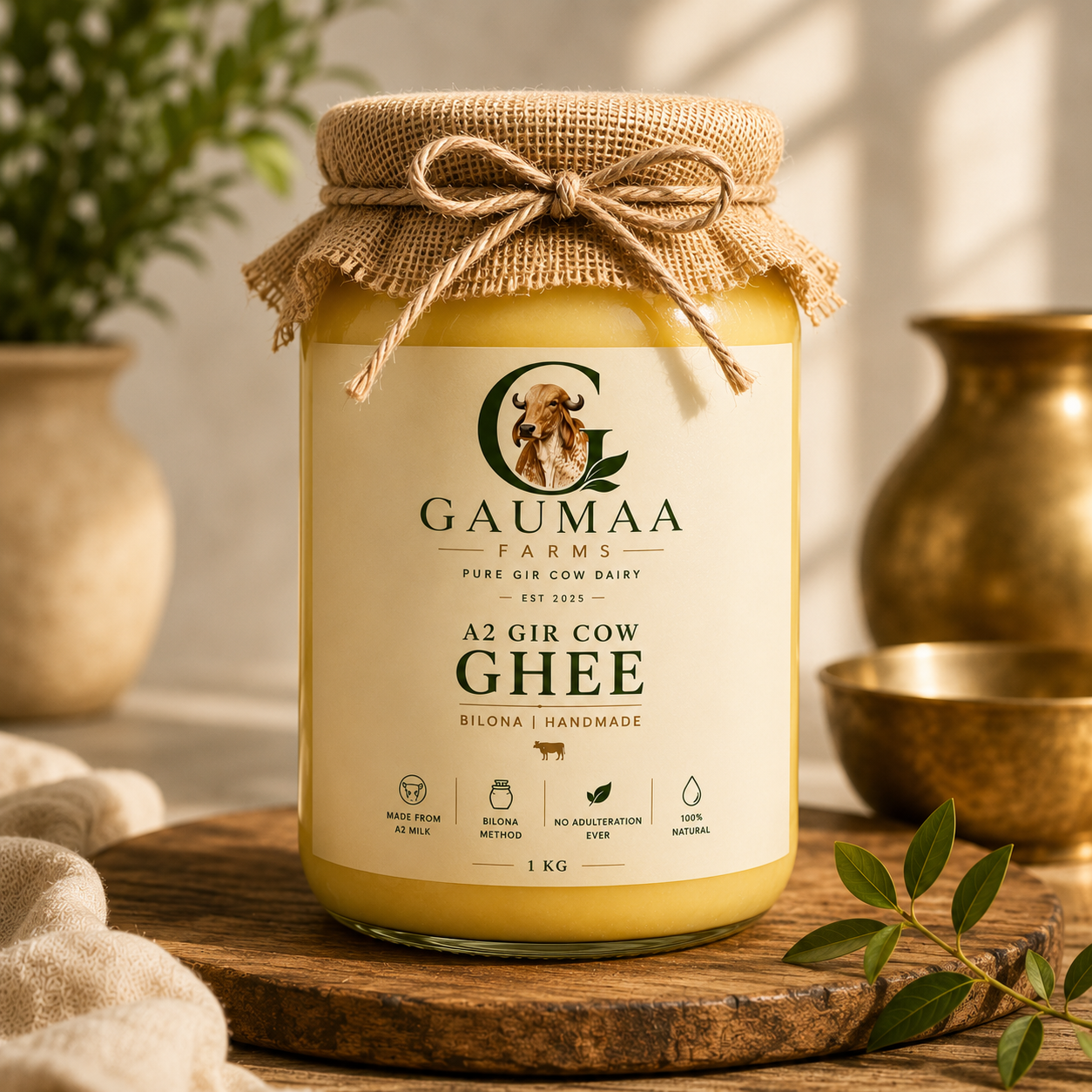
Bilona ghee vs cream ghee comes down to one important question: what was the ghee made from before it reached the pan? At Gaumaa Farms, we begin with the milk of our Gir and Sahiwal cows, set it into curd, churn the curd to make makhan, and then slowly clarify that makhan into ghee. This traditional curd-first route is why our ghee has a fuller, familiar aroma and why families who care about the story behind their food often choose it.
Both cream ghee and Bilona ghee can be genuine ghee. However, they do not follow the same journey. Cream-based ghee starts from separated milk cream. Bilona ghee starts earlier: milk becomes curd, curd becomes makhan, and makhan becomes ghee. For us, that difference is not a marketing line. It is the reason we make ghee in a way we would confidently serve our own family.
Bilona ghee vs cream ghee at a glance
| Buying point | Curd-first Bilona method | Cream-based method |
|---|---|---|
| Starting point | Set curd | Separated cream |
| Traditional path | Milk → curd → makhan → ghee | Milk cream → ghee |
| Time and handling | Several careful stages | Fewer production stages |
| What a buyer should ask | Was the curd churned into makhan? | Does the label clearly state the process? |
| Flavour expectation | Often deeper and more cultured | Can be milder and more uniform |
The table is not meant to say that every cream-based jar is poor quality. It is meant to help you buy with open eyes. A clear brand should explain its milk source, process and handling in plain language. If you specifically want traditional Bilona ghee, the curd and churning stages should be visible in the brand’s explanation.
What makes ghee “Bilona”?
The word Bilona is linked with churning. In the traditional process, fresh milk is first made into dahi or curd. The curd is then churned to separate butter, known in Indian homes as makhan, from the liquid portion. Finally, the makhan is heated gently until the water cooks away and the characteristic ghee aroma develops.
At Gaumaa Farms, our process deliberately respects these stages. We do not begin with anonymous cream. We begin with our own farm milk, then move slowly through curd and makhan. That gives our team a clearer connection to every stage. It also keeps the process close to the food traditions many of us grew up with: a bowl of curd, hand-churned makhan, and ghee on warm dal or roti.
Step 1: Milk from our own cared-for cows
Good ghee begins long before the cooking vessel. Our indigenous Gir and Sahiwal cows live at our farm in Nikhri, Dharuhera, in Rewari district. They are not kept continuously tied. They move around the farm and receive balanced green fodder, dry fodder and appropriate nutrition. We grow fodder with farm cow-dung fertiliser, which helps us stay close to the source of what they eat.
Seasonal feeding and grazing can include crops and plants such as beetroot, moringa, sugarcane, turnip, radish, lemongrass and seasonal plants near the Sahibi River bank. We share this as a picture of animal care and traceability, not as a promise that any herb turns into a medicinal ingredient in ghee. The real point is simple: food quality is built through daily attention, not a clever label.
Step 2: Milk becomes curd
The curd stage is the heart of a Bilona-style route. It is also why a curd-first process needs patience. Rather than moving directly from cream to heat, we allow the milk to become curd before churning. This is the food pathway that distinguishes the method.
Curd is familiar to every Indian kitchen, yet it asks for care. Temperature, time, cleanliness and culture all matter. We make our fresh curd with the same respect for the starting milk. The curd that goes into a ghee batch is not an afterthought; it is the first important transformation.
Step 3: Curd becomes makhan
Next comes the churning stage. Churning separates makhan from the curd. This is the step that gives Bilona its name and its traditional identity. It is slower than a shortcut, but it makes the process honest and easy to understand. When a brand calls a ghee Bilona, ask whether it can describe this curd-to-makhan stage clearly.
Our customers can also enjoy makhan as a food in its own right. It belongs on parathas, millet rotis and simple home meals. More importantly, it connects the ghee jar to a real kitchen journey rather than to a vague promise on packaging.
Step 4: Makhan becomes ghee
Finally, we heat the makhan carefully to make ghee. At this point, attention still matters. We want a clean, warm aroma and a flavour that complements food instead of covering it. The finished ghee should feel at home on dal, roti, khichdi, vegetables and festive dishes.
Why families choose Bilona ghee for daily meals
For most families, the appeal of Bilona ghee begins with food, not with a dramatic health claim. A spoon over dal can make a simple meal more satisfying. A little ghee on roti adds familiar richness. It is also useful for tadka, halwa, pan-roasted vegetables and festive cooking. That practical versatility is why ghee has stayed in Indian kitchens for generations.
Ghee is mainly dairy fat, so it is an energy-rich food. Used in quantities that suit the household’s overall diet, it can bring taste, texture and cooking convenience to meals. Ayurveda traditionally values ghee in food practices; modern nutrition should not be replaced by a promise or a cure. We prefer to keep the message grounded: choose good food, use it thoughtfully, and know where it came from.
When children, parents and grandparents share the same meal, ingredients should be easy to explain. This is our standard at Gaumaa Farms. We aim to sell our customers only what we would confidently serve our own families. That is why we spend time on cow care, source control, curd-making, churning and slow clarification.
How to choose genuine Bilona ghee
Use this simple buyer checklist before choosing a jar:
- Ask about the process: Does the brand say milk → curd → makhan → ghee?
- Ask about milk source: Can it identify the farm or herd rather than give a vague claim?
- Ask about traceability: Who looks after the animals and manages the milk?
- Look beyond colour: Colour alone does not prove purity, breed or method.
- Look beyond graininess: Texture can vary with temperature and batch handling.
- Choose clarity over hype: Words such as “pure”, “desi” or “Bilona” should come with an explanation.
At Gaumaa Farms, our ghee starts with milk from our own Gir and Sahiwal cows and follows the curd-to-makhan route. If a cow needs veterinary treatment, we keep her milk out of customer milk and dairy products for the required withdrawal period. That is not a special claim; it is part of responsible farm management.
Why Gaumaa Farms is different
Many brands can sell a jar of ghee. Far fewer can show you the full story behind it. Our farm is close enough to our customers in Dharuhera, Bhiwadi and Rewari for them to understand our values: cared-for indigenous cows, balanced farm feeding, individual observation, and a traditional process that starts with curd rather than unnamed cream.
We do not believe better food needs exaggerated promises. Instead, we believe it needs care that can be described. Our cows’ daily comfort, their feed, the milk we collect and the curd we churn are all part of the same responsibility. When you choose our traditional Bilona ghee, you choose a product with a clear beginning and a clear method.
Ways to enjoy Gaumaa Bilona ghee
- Finish a bowl of dal or khichdi with a small spoon.
- Spread it lightly on hot roti, bajra roti or paratha.
- Use it for a fragrant tadka with cumin, hing and seasonal vegetables.
- Add it to festive sweets when you want a traditional dairy aroma.
- Pair it with our A2 cow milk, fresh curd or paneer for a farm-to-kitchen meal plan.
Frequently asked questions
Is Bilona ghee better than cream ghee?
They are different processes. Bilona ghee follows the curd-to-makhan route, while cream ghee begins with cream. If you value a traditional curd-first method and a clear farm story, Bilona is the better match.
Is every yellow or grainy ghee Bilona ghee?
No. Colour and graininess can vary with milk, temperature and handling. Ask about the actual process instead.
Does Bilona ghee come from curd?
Yes. Traditional Bilona ghee begins with curd, which is churned to make makhan before the makhan is clarified.
What is A2 Bilona ghee?
A2 describes the beta-casein type in the starting milk. Bilona describes the curd-churning method. They are different ideas, so a buyer should check both the herd/milk source and the method.
Where can I buy Gaumaa Bilona ghee?
Visit our ghee product page or contact Gaumaa Farms to confirm current availability and delivery options.
Choose food with a story you can trust
If you are searching for Bilona ghee vs cream ghee because you want more than a generic jar, start with the process. At Gaumaa Farms, we keep it simple: cared-for cows, milk from our farm, curd, churned makhan and slow-made ghee. For families in and around Dharuhera, Bhiwadi and Rewari, that is a more meaningful way to bring a traditional ingredient home.
Explore our Bilona ghee or speak with our team to choose dairy you can understand and serve with confidence.
Sources and further reading
For general dietary guidance, see the ICMR–NIN Dietary Guidelines for Indians. For the food-standard context for milk products, see FSSAI guidance.