
Best A2 Milk Near Me: How to Choose a Trusted Farm

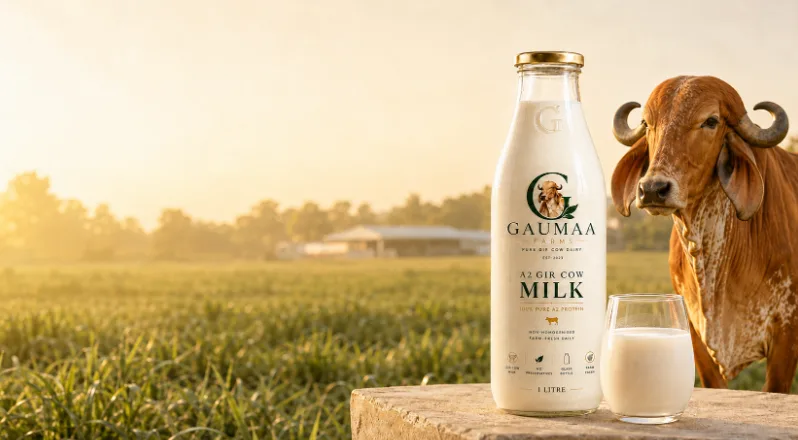
Best A2 milk near me. This guide answers a purchase-intent search with verifiable selection criteria and explains where Gaumaa Farms fits.
Best A2 milk near me: the short answer
The best A2 milk near you is not decided by the A2 label alone. Look for an identifiable farm and herd, accurate explanation of A2 beta-casein, individual-cow monitoring, veterinary withdrawal controls, clear raw or pasteurised status, safe handling instructions and a supplier who remains accountable after delivery.
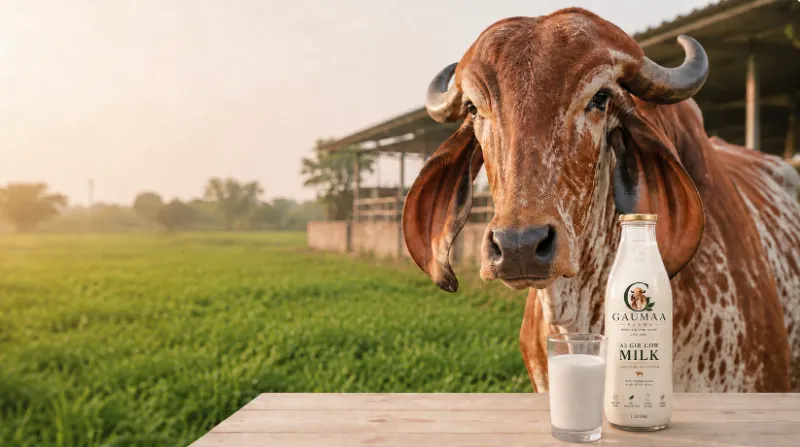
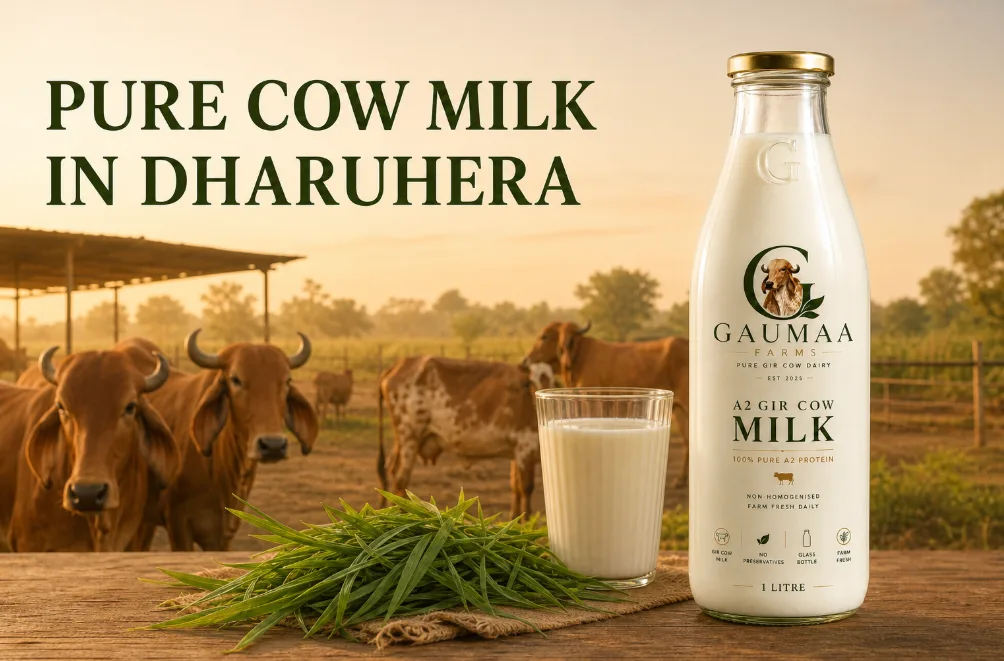
At Gaumaa Farms in Nikhri, Dharuhera, we raise our own Gir and Sahiwal cows. Our cows are not kept continuously tied. We manage their green fodder, dry fodder and nutrition, grow fodder using fertiliser made from our own cow dung, and separate milk when a treated cow is within a required withdrawal period. We serve Dharuhera, Bhiwadi and Rewari subject to the current route. We aim to sell customers only what we would confidently serve our own families.
Why an A2 label cannot identify the best supplier
A2 describes one beta-casein variant. It does not automatically mean lactose-free, allergy-safe, organic, residue-free, raw, pasteurised or microbiologically safe. Each question needs its own evidence. Therefore, a useful near-me search must move from a label to the system behind the milk.
Seven questions to ask every nearby A2 milk supplier
- Where is the farm and who manages the cows?
- Is the milk from an identified herd or mixed procurement?
- What do the cows eat and how is their condition monitored?
- What happens to milk when a cow receives medicine?
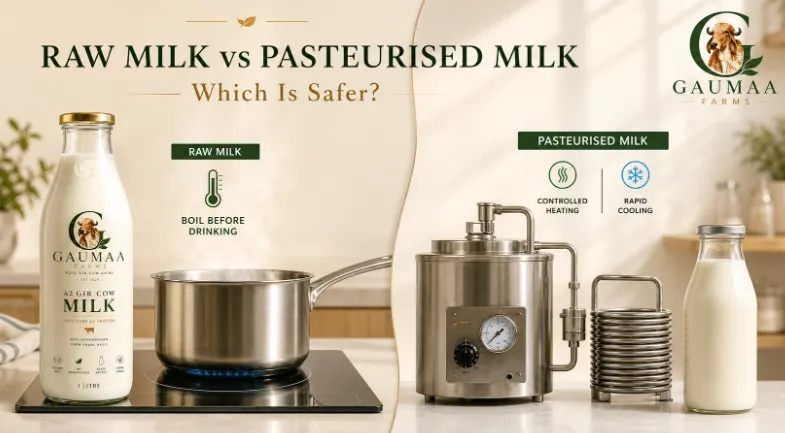
- Is the milk raw or pasteurised?
- What boiling, cooling and storage instructions are given?
- Who answers if a delivery or quality concern occurs?
A local milkman may know each animal or may collect from several sources. A packaged company may have strong processing controls but less individual-cow visibility. A farm-direct supplier may offer better traceability but must still control hygiene and explain raw-milk risk. The category does not prove quality; the verified process does.
“Is A2 milk lactose-free?” is one of the first questions people ask us when ordinary milk makes them feel heavy, gassy or uncomfortable. The short answer is no. A2 milk normally contains lactose, just like other cow milk. The term A2 describes a type of milk protein—not the milk sugar called lactose.
That distinction matters. If someone mistakes A2 milk for lactose-free milk, they may choose a product that still causes symptoms. At the same time, some people who describe themselves as “milk intolerant” may react to more than one part of milk. Research into A1 and A2 beta-casein is developing, but it does not turn A2 milk into a treatment or a guaranteed solution.
At Gaumaa Farms, we prefer a clear answer over an exaggerated promise. We produce raw A2 cow milk from our indigenous Gir and Sahiwal cows. However, we do not call it lactose-free, and we do not claim that everyone will digest it comfortably. We want our customers to know exactly what the A2 label means before they make a choice for their family.
Benefits families look for in A2 cow milk
Families usually search for A2 milk because they want nourishing everyday food from a source they can understand. Cow milk naturally supplies high-quality protein, calcium and other nutrients. Protein supports normal growth and the maintenance of muscle. Calcium contributes to normal bones and teeth. Therefore, milk can be a useful part of meals for growing children, active adults and older family members when it suits their individual diet.
The A2 label describes the beta-casein type. Some controlled studies report that certain milk-sensitive adults experienced fewer digestive symptoms with A2-only milk than with conventional milk containing both A1 and A2 beta-casein. Evidence continues to develop, so we do not promise the same experience for everyone. Instead, we combine the A2 milk our Gir and Sahiwal cows produce with the practical benefits of a traceable local farm.
Protein for growth, strength and daily meals
Milk protein supplies essential amino acids. Children need adequate protein for normal growth, while adults use dietary protein to maintain and repair body tissues. Older people also need sufficient protein as part of a balanced diet. A glass of milk, fresh paneer, curd or lassi can help families include dairy protein in familiar Indian meals.
Calcium for bones and teeth
Calcium is central to normal bone and tooth health. Children build bone during growth, and adults must continue meeting their calcium needs. Milk and milk products offer a practical dietary source. No single food guarantees strong bones because vitamin D, activity, total diet and health also matter. Nevertheless, good-quality dairy can make everyday calcium intake easier.
Traditional taste and useful kitchen versatility
Fresh cow milk supports much more than a morning glass. Families can use it for tea, kheer, curd, lassi and paneer. Its cream can also begin the traditional journey toward makhan and Bilona ghee. As a result, one traceable starting ingredient can support several familiar foods.
The benefit of knowing the source
Nutrition information on a label cannot show how the cow lived. By choosing Gaumaa, customers can connect their milk to our own Gir and Sahiwal cows, the fodder we manage and the treatment controls we follow. That visibility turns “near me” into a relationship with an accountable farm.
How we describe Gaumaa A2 milk
For us, A2 is one part of the milk story. The rest begins with the cow and the farm.
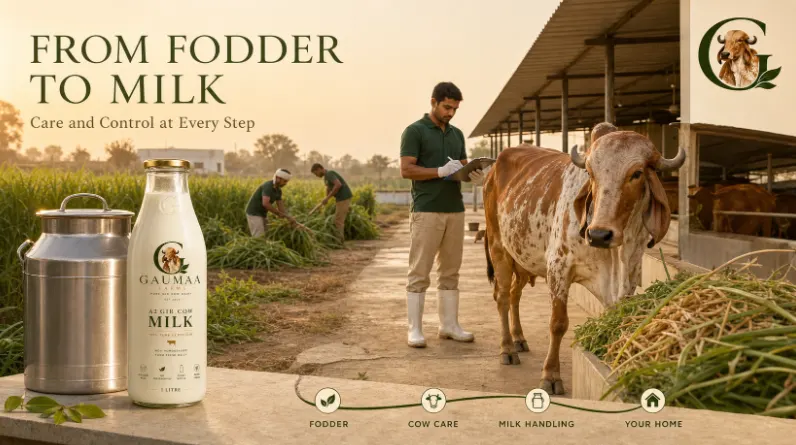
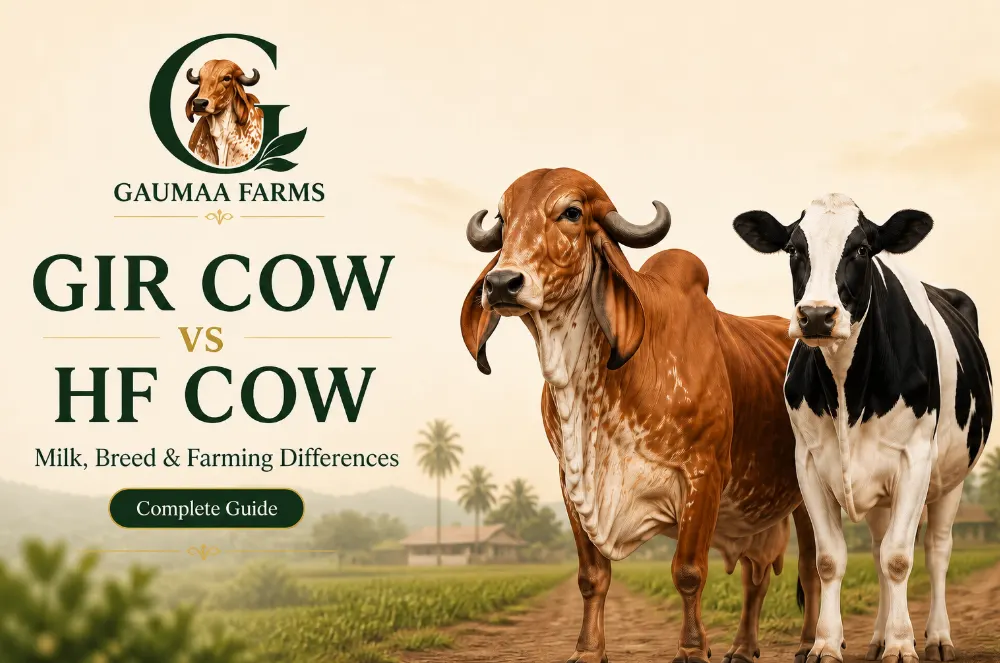
We raise indigenous Gir and Sahiwal cows at our farm in Nikhri, Dharuhera, Rewari. Our cows are not kept continuously tied. They have room to move around the farm, and our team observes them individually. We provide a balanced combination of green fodder, dry fodder and appropriate nutrition. We also grow fodder using fertiliser made from our own cow dung instead of treating the A2 label as the only quality signal.
Depending on the season and grazing conditions, the cows may receive or encounter plants such as neem leaves, ashwagandha, jivanti, giloy, beetroot, moringa, turmeric root, sugarcane, turnip, lemongrass and radish. We describe this honestly as part of our feeding and husbandry approach. We do not claim that medicinal properties from those plants pass into the milk.
In other words, our promise is not “A2 solves every problem”. Our promise is that we know our herd, manage our cows directly and can explain how the milk moves through our own farm. We aim to sell our customers only what we would confidently serve our own families.
What should you check on an A2 milk label?
Before buying, ask the supplier direct questions instead of relying on attractive packaging.
- Does “A2” refer to beta-casein? The supplier should explain the term correctly.
- Is the product lactose-free? Unless it has undergone a separate lactose-removal or lactase treatment, the answer should be no.
- Which cows produce the milk? Breed is useful context, although a breed name alone is not a complete verification system.
- Is the milk raw or pasteurised? Customers need clear preparation and storage instructions.
- Can the farm explain cow care and treatment controls? Traceability should extend beyond a front-label claim.
- What happens when a cow receives medicine? Milk should be managed according to the veterinary product’s withdrawal period.
What makes our milk choice different?
A customer can buy a product carrying the words “A2 milk” from many places. Our difference lies in what we control around those words.
We work with our own Gir and Sahiwal cows. We manage their environment, fodder and daily observation. When a cow needs treatment, her milk is kept away from the customer supply for the required withdrawal period. We do not want milk from an unknown mix of animals, farms and treatment histories to become impossible to trace.
This does not mean every other supplier is unsafe. It means traceability gives a buyer better questions and a farm clearer responsibility. For families paying more for carefully produced milk, accountability should be visible not assumed.
Common A2 milk claims: what is accurate and what goes too far?
Online discussions often combine several different claims into one. That makes an honest buying decision harder. A2 milk has a specific meaning: it describes the beta-casein type. It does not automatically prove that the milk is organic, lactose-free, raw, pasteurised, residue-free or nutritionally superior in every respect. Each of those questions needs its own evidence.
For example, a breed name can help a buyer understand the herd, yet breed alone does not describe hygiene, storage, veterinary controls or the animal’s daily environment. In the same way, attractive words such as “natural” and “farm fresh” do not replace clear handling information. Therefore, we encourage customers to look beyond one phrase and ask how the whole farm operates.
At Gaumaa Farms, we connect the A2 discussion to practices we can actually describe. Our Gir and Sahiwal cows live at our farm. They can move around instead of remaining continuously tied. We grow fodder with composted cow-dung inputs and provide green fodder, dry fodder and other nutrition according to the farm’s feeding approach. We also observe cows individually and separate milk when veterinary treatment requires a withdrawal period.
These practices do not turn milk into medicine. Rather, they create a more visible chain of responsibility. That distinction matters because customers should be able to separate scientific facts from marketing promises.
A practical decision guide for families
If your main concern is lactose intolerance, the most relevant question is not whether the milk is A2. Ask whether it is lactose-free, how much lactose a serving contains and what quantity you personally tolerate. If your concern is milk-protein allergy, do not use A2 milk as an alternative without medical guidance.
If your main concern is source and traceability, ask who owns or manages the cows, how treatment-period milk is controlled, how the milk is chilled and transported, and what the household must do after delivery. Finally, if you choose raw milk, remember that boiling and prompt refrigeration remain essential. A trustworthy farm should make these limitations clear even when they are less exciting than a health promise.
Why choose Gaumaa when searching for the best A2 milk near me?
We offer more than an A2 claim. We offer milk from cows we know and care for, fodder we manage, freedom of movement on our farm, individual observation and clear separation whenever veterinary treatment requires a withdrawal period. We then connect that same milk to our paneer, curd, lassi, makhan and Bilona ghee.
For families in Dharuhera, Bhiwadi and Rewari, this means nutritious dairy with a nearby source and a team that can answer questions. Contact Gaumaa Farms to check the current delivery route. We would be proud to supply your family with the same standard of food we serve our own.
Safety note: Gaumaa milk is raw, so boil it before drinking. A2 milk still contains lactose and is not suitable for cow-milk protein allergy.
Frequently asked questions
1. Is A2 milk completely lactose-free?
No. A2 describes a beta-casein protein variant. Unless the milk is separately treated to remove or break down lactose, it contains lactose.
2. Can lactose-intolerant people drink A2 milk?
Some people may tolerate a limited amount, while others may still develop symptoms because the lactose remains. Seek individual advice if symptoms are significant or persistent.
3. Does boiling A2 milk remove lactose?
No. Boiling raw milk is an important safety step, but it does not remove lactose.
4. Is A2 milk safe for cow-milk protein allergy?
No. A2 milk still contains cow-milk proteins and is not a safe substitute for someone with cow-milk protein allergy.
5. What does Gaumaa Farms mean by A2 milk?
We use the term for milk from our indigenous Gir and Sahiwal cows that is intended to contain the A2 beta-casein variant. It does not mean lactose-free or disease-treating.